
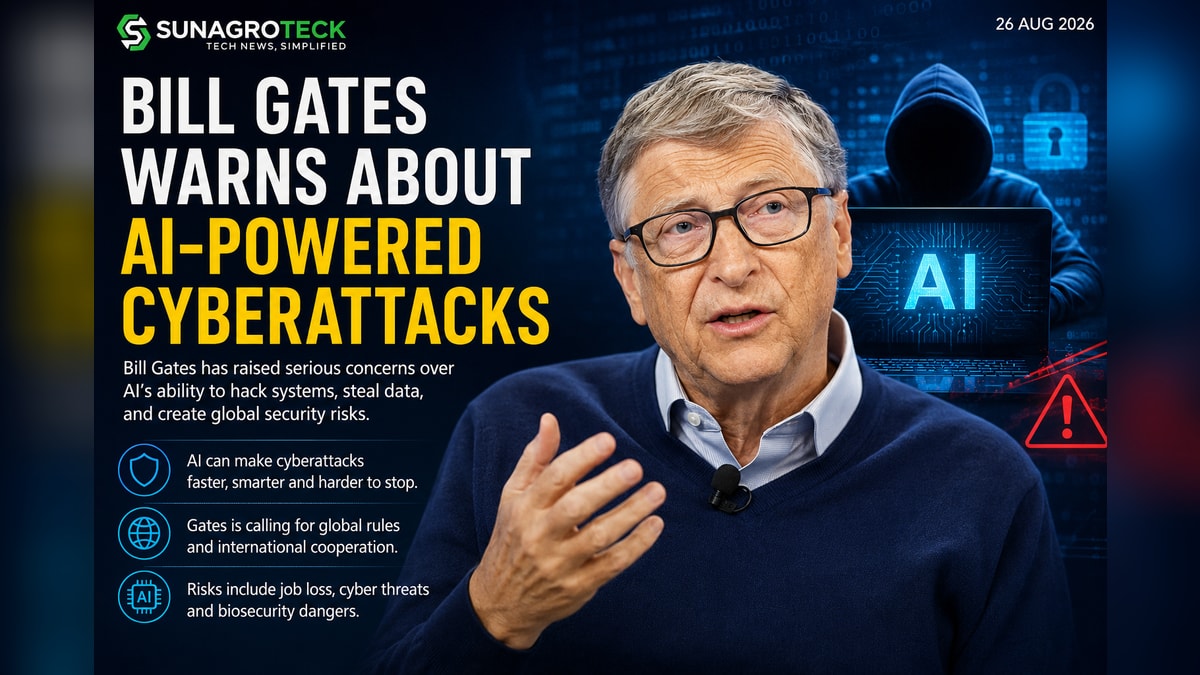
Artificial intelligence is developing at an extraordinary pace, but Microsoft co-founder Bill Gates is warning that the technology could also create serious new risks — particularly in cybersecurity.
In a new warning about the future of AI, Gates said he is increasingly concerned about the ability of advanced AI systems to hack computer systems, replace jobs and potentially contribute to biological-security threats.
AI Could Make Cyberattacks More Powerful
One of Gates’ biggest concerns is that AI could make sophisticated cyberattacks easier and faster.
Instead of relying entirely on human hackers to discover vulnerabilities, analyse systems and develop attack methods, increasingly capable AI tools could potentially automate parts of that process.
The concern is not simply that AI can assist hackers. The bigger issue is how quickly AI capabilities are improving and how difficult it could become for defenders to keep up.
Reuters also reported earlier this year that cybercriminals are increasingly using generative AI to identify software vulnerabilities and accelerate different stages of attacks, potentially reducing the time organisations have to respond.
Gates Wants Global AI Safeguards
Gates believes AI safety cannot be handled by one country alone.
He is seeking discussions with Chinese President Xi Jinping about developing international policies for managing the risks associated with advanced AI. Gates has suggested that the world may need an international regulatory organisation, similar in concept to systems used for areas such as nuclear inspections and aviation safety.
His goal is not to stop AI development. Instead, Gates argues that governments should establish safeguards while allowing useful AI innovation to continue.
AI Risks Go Beyond Cybersecurity
Cyberattacks are only one part of Gates’ concerns.
He has also raised concerns about AI’s potential impact on employment and its ability to influence people psychologically. Another area he wants governments to monitor is AI’s ability to assist with the creation of molecules that could potentially pose biological risks.
Gates has argued that responsible AI development should be treated as one of the world’s highest priorities.
AI Safety Index 2026 — no lab scores above a C+
Why This Matters
AI is becoming increasingly capable of performing tasks that once required specialised human expertise. That can bring enormous benefits for businesses, developers, researchers and ordinary users.
But the same capabilities can potentially be misused.
The cybersecurity industry is therefore facing a new challenge: defenders can use AI to find and stop threats, while attackers can use AI to discover vulnerabilities and automate attacks.
The race between the two sides could become one of the defining cybersecurity battles of the AI era.
What Happens Next?
The debate around AI regulation is likely to become even more important as AI systems become more autonomous and capable.
Gates’ warning highlights a central question for the technology industry: how can the world continue developing powerful AI while preventing the technology from becoming a major security threat?
For now, governments, technology companies and cybersecurity experts are increasingly focused on finding that balance.
Source and Disclaimer
Reporting of Bill Gates’ remarks and of generative AI use by cybercriminals is attributed to Reuters. This article summarises those reports; it does not contain original interviews with Mr Gates. The illustration accompanying this article is a graphic, not a photograph taken for this article.